
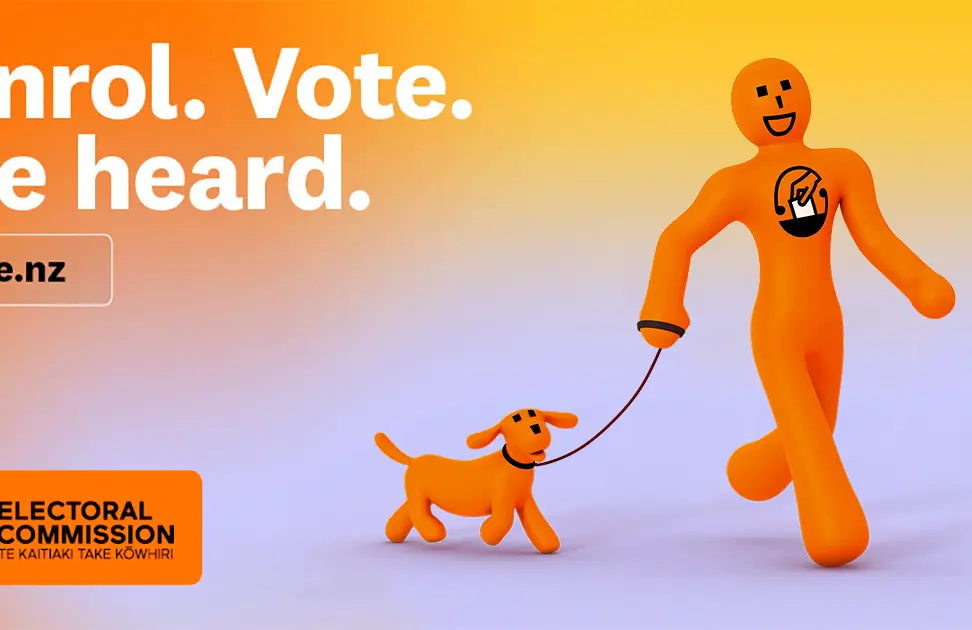

Your Guide to Voting in the Election
Elections come with a lot of jargon, and it’s hard to have your say when no one’s explained how it all works. This page is a resource created by National Care-Experienced Youth Advocate Alchimae Prasad and breaks it down for you in plain language.
You’ll find:
- key dates
- how to enrol, including if you move around a lot or don’t feel safe having your address on the roll
- the difference between the Māori roll and the general roll
- how MMP, coalitions and your two votes work
- how Bills and Select Committees work, and how care-experienced rangatahi have used them to create change
- where each party in Parliament stands on care and protection
Need a hand enrolling or have questions? Reach out to your local VOYCE team. We’re here to help.


Key Dates
Young people have been able to rely on election-day enrollment at recent general elections, so this is an important change. New this year: you can’t enrol on Election Day or at a voting place anymore.
- Sunday 25 October (midnight): last day to enrol or update your details
- Monday 26 October: advance voting opens
- Saturday 7 November: Election Day, with voting places open 9am–7pm
Enrolling to Vote
Can I still enrol for this election?
Enrolment for the 2026 General Election closed at midnight on 25 October. If you enrolled by then, you can vote. If you’re not sure whether you made it, check your enrolment at vote.nz or call 0800 36 76 56.
If you missed the deadline, you won’t be able to vote this time. That’s gutting, but you can still get enrolled so you’re ready for the next election.
What if I move around a lot?
This can be especially important for care-experienced young people. You might:
- move between placements
- move in with whānau
- be staying with friends
- be couch-surfing
- move into supported or independent living
- not have one permanent address
If you’re enrolled at an old address, you can still vote! You might just need to cast a special vote. It takes a bit longer but your vote still counts. Ask the staff at any voting place and they’ll help you.
For next time: your address decides which electorate you vote in, and it doesn’t update automatically when you move. If you’re couch-surfing or don’t have a fixed address, you can usually enrol using:
- the place you spend most of your time, or
- the last address you lived at for at least a month
You can also give a separate postal address where your mail is safe, like a trusted whānau member, a friend or a support organisation.
What if I don’t feel safe having my address on the electoral roll?
If having your details public could put you or your whānau at risk, for example because of family violence or past placements, you can apply for the unpublished roll. Your name and address are kept confidential, and you can still be on either the Māori or general roll. If you’re on the unpublished roll, you’ll cast a special vote.
What about the Māori roll?
If you’re of Māori descent, you can choose the Māori roll or the general roll. Your choice only changes your electorate vote, meaning which local candidates you vote for. Your party vote stays the same. Together, Māori roll choices also help decide how many Māori electorates there are in future, so your choice shapes Māori representation in Parliament and who represents your rohe.
The roll you’re on now is the one you’ll vote on for this election. After the election, you can switch rolls any time except in the three months before an election.
Still need some support? Kei te pai 😄
Call the Electoral Commission free on 0800 36 76 56 with any questions about your enrolment, special votes, the Māori roll, the unpublished roll, or voting in general. VOYCE Kaiwhakamana can help too. Reach out to your local team!
Politics 101 - How Does Voting Actually Work?
How does voting work?
You get two votes:
- Electorate vote: for the person you want to represent your local area. The candidate with the most votes becomes the electorate MP.
- Party votes: for the party you want in Parliament. Under MMP, this decides how many seats each party gets, so it’s the big one.
There are usually 120 seats in Parliament, so a party needs 61 to govern alone. That rarely happens under MMP (the only time was Labour in 2020), so parties usually team up to form a Government. The current Government is a coalition of National, ACT and NZ First.
A party usually needs at least 5% of the party vote to get into Parliament, unless it wins an electorate seat.
Both are valid! It can help to look at what each party says about care, housing, education, health and support for rangatahi.
Ministers are MPs put in charge of areas like Children, Education, Housing and Health. The Prime Minister chooses them, and they have big influence over policy. For example, Karen Chhour (ACT) is the Minister for Children, responsible for Oranga Tamariki.
A Bill is a proposed new law or change to a law. Most go to a Select Committee, where anyone can make a submission in writing or in person. Committees can recommend changes, or that a Bill doesn’t go ahead. Care-experienced rangatahi have done this before. Their voices helped stop the Youth Demerits Bill in 2021 and shaped the 2017 Oranga Tamariki law changes.
PARTIES IN PARLIAMENT RIGHT NOW
Current Coalition
Focus: growing the economy, lowering taxes, reducing crime, personal responsibility.
On care: commits to preventing child abuse and strengthening child protection. Says it needs more evidence before committing to making children in care a priority population or ensuring all children and carers get adequate support.
Focus: individual freedom, lower taxes, smaller government.
On care: commits to preventing child abuse, strengthening child protection and ensuring adequate support. No clear yes or no on all Royal Commission recommendations or on Māori and community-led care.
Focus: New Zealand’s interests first, border security, employment, older New Zealanders, vocational training.
On care: commits to all Royal Commission recommendations, adequate support, and making children in care a priority population. No clear yes or no on Māori and community-led care.
Official Opposition
Focus: improving public services, creating well-paid jobs and making healthcare and housing more affordable. It supports government investment to reduce inequality.
On care: commits to preventing child abuse and strengthening child protection. It supports Māori and community-led care approaches, with further details in its response, but did not give a clear yes or no to implementing every recommendation from the Royal Commission into Abuse in Care.
Focus: the environment, reducing poverty, public services, Te Tiriti o Waitangi.
On care: commits to all Royal Commission recommendations, Māori-led care, adequate support, and making children in care a priority population.
Focus: Māori self-determination, Te Tiriti o Waitangi, reducing inequality, Māori-led services.
On care: commits to all six Tick 4 Kids proposals, including the Royal Commission recommendations, Māori and community-led care, and making children in care a priority population.
Polling over 5% in 2026
Focus: changing how politics works, tax reform, innovation, the environment. Willing to work with Labour or National.
On care: commits to all Royal Commission recommendations and Māori and community-led care. No clear yes or no on making children in care a priority population or ensuring adequate support.
-
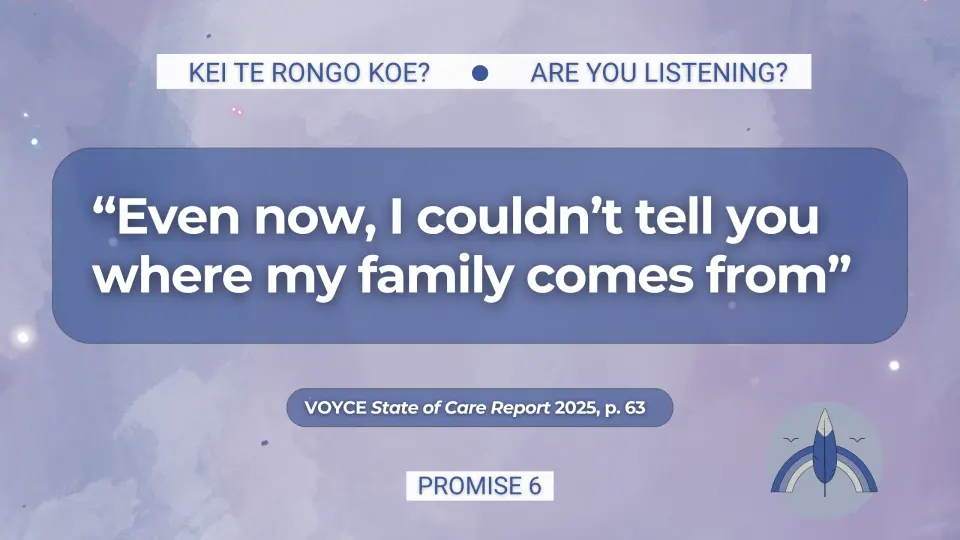
Identity & Belonging In Care - Rangatahi Reflections
What does identity and belonging look like growing up in care?
-
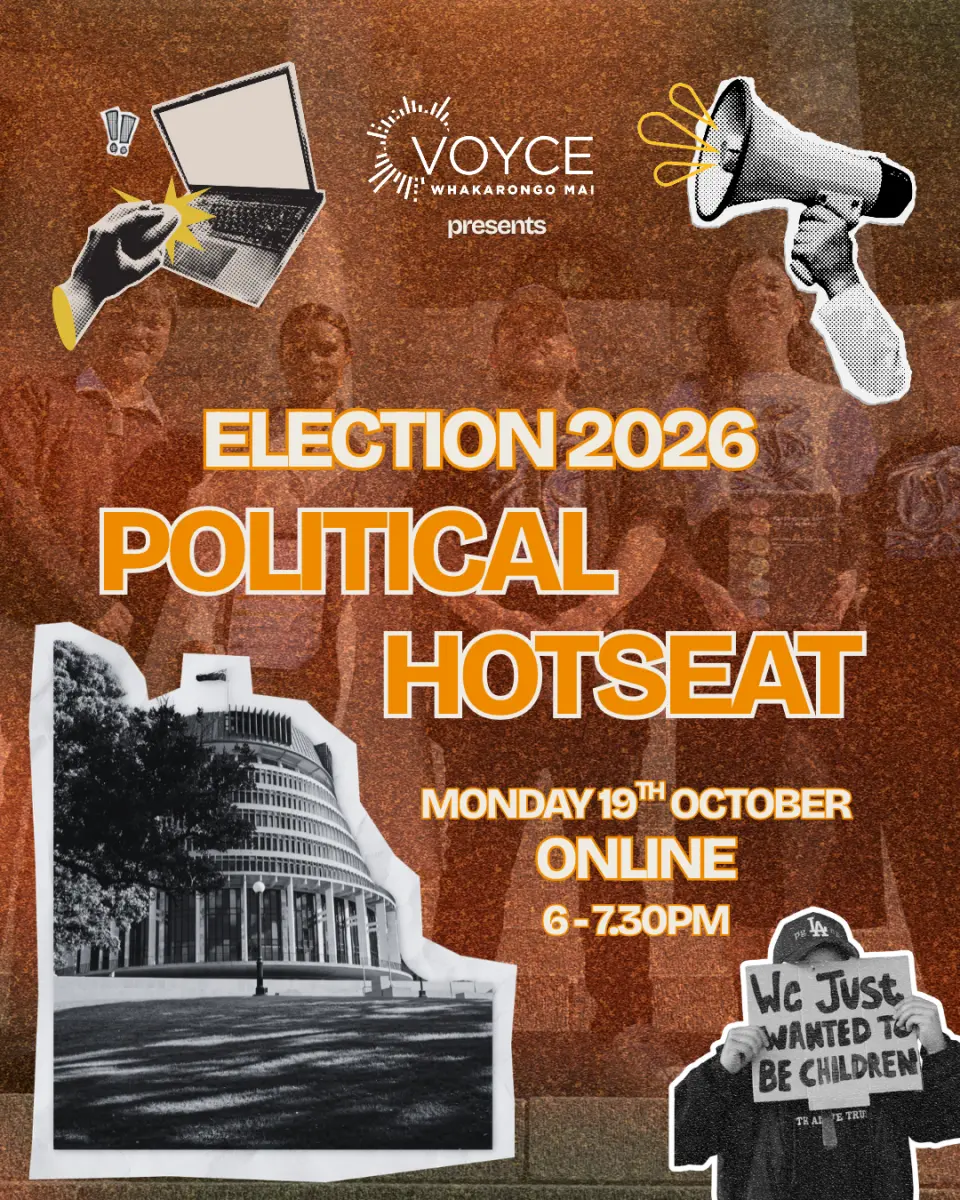
Care-Experienced Rangatahi to Put Politicians in the Hot Seat Ahead of Election
Care-experienced rangatahi from across Aotearoa will put politicians on the spot ahead of the election, questioning them directly on the issues that matter most to children and young people in care.
-

My Biggest Moves
In the lead up to this year’s election, we are spotlighting one of the 6 Promises each month. For June we have been focusing on Promise 2 – the promise of safety and stability for every child in care.


