
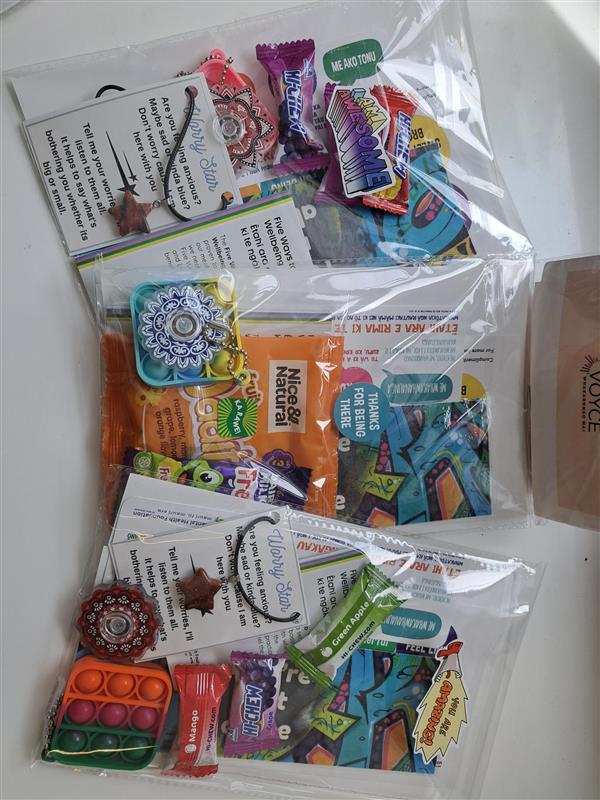
During Mental Health Awareness Week, VOYCE delivered wellbeing packs to rangatahi we actively engage with, as part of a passive tūhono initiative led by Jessica Bartleman. The packs included fidget toys, an emotional care star necklace, mental health resources, and a cheat sheet of emergency/helpline numbers to support rangatahi aged 8–23.
A total of 30 packs were given out, each received with excitement and gratitude. Rangatahi responded with enthusiasm and appreciation:
- “This is honestly SO cool! Thank you for making my day”
- “OMW, is this for me?? YAY”
- “I LOVE THIS SO MUCH. THANK YOU”
- “This necklace is so cute, so petite, I want to put it on now”
- “Thank you for acknowledging the importance of mental health”
- “This is so awesome, thank you”
These packs provided rangatahi with practical tools for emotional wellbeing, while also reinforcing that mental health matters and that VOYCE is there to support and celebrate them.